



Ratib al-Attas
Ratib al-Attas (Arabic: راتب العطاس; “The Litany of al-Attas”) is a renowned litany compiled by the great saint and Qutb, Habib Umar ibn Abdur Rahman al-Attas (992–1072 AH), bringing together Qur’anic verses, Prophetic supplications, and other invocations. Its blessings have been described as an endless ocean, and many virtues and benefits are associated with its recitation, including the removal of afflictions and difficulties, fulfilment of needs, protection of one’s family, forgiveness of sins, and a blessed and prolonged life. The Ratib is traditionally recited every day, or once in the morning and once in the evening when recited for a particular intention. Ratib al-Attas is said to be the only work attributed to Habib Umar during his lifetime.
Read lessArabic, Transliteration and Translation
ٱلْحَمْدُ لِلَّهِ رَبِّ ٱلْعَـٰلَمِينَ ❁ ٱلرَّحْمَـٰنِ ٱلرَّحِيمِ ❁ مَـٰلِكِ يَوْمِ ٱلدِّينِ ❁ إِيَّاكَ نَعْبُدُ وَإِيَّاكَ نَسْتَعِينُ ❁ ٱهْدِنَا ٱلصِّرَٰطَ ٱلْمُسْتَقِيمَ ❁ صِرَٰطَ ٱلَّذِينَ أَنْعَمْتَ عَلَيْهِمْ غَيْرِ ٱلْمَغْضُوبِ عَلَيْهِمْ وَلَا ٱلضَّآلِّينَ ❁﴾
Al-ḥamdu li-Llāhi Rabbi l-ʿālamīna, r-Raḥmāni r-Raḥīmi, Māliki yawmi d-dīni, iyyāka naʿbudu wa-iyyāka nastaʿīnu, ihdinā ṣ-ṣirāṭa l-mustaqīma, ṣirāṭa lladhīna anʿamta ʿalayhim, ghayri l-maghḍūbi ʿalayhim wa-lā ḍ-ḍāllīn﴿.
All praise belongs to Allah, Lord of all worlds, the Most Compassionate, the Most Merciful, Master of the Day of Judgement. You alone we worship, and You alone we ask for help. Guide us along the straight path, the path of those You have favoured, those who have neither incurred Your anger nor gone astray.” (1:1–7)
Video
About Ratib al-Attas
Habib Umar al-Attas
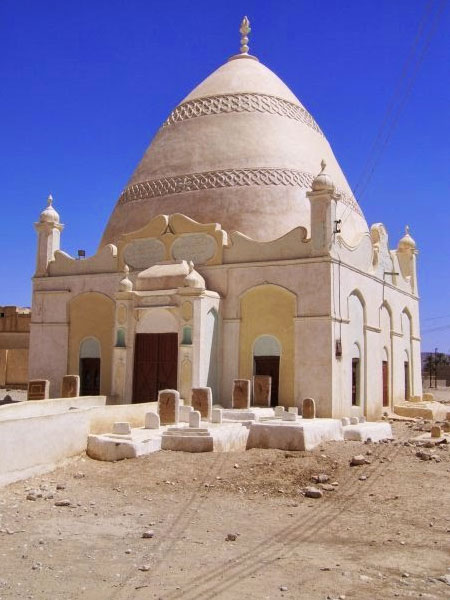
Habib Umar ibn Abd al-Rahman al-Attas was born in 992 AH/1584 CE in the village of al-Lisk in Hadramawt, Yemen. He was raised by his father, Habib Abd al-Rahman, who was renowned for his piety, devotion, and saintly character. From an early age, Habib Umar was nurtured in an environment of knowledge, worship, and spiritual refinement, laying the foundations for the remarkable life that followed.
The family name al-Attas, meaning “one who sneezes”, is linked to a well-known account concerning his grandfather, Aqil ibn Salim. It is related that while still in his mother’s womb, Aqil would sneeze and immediately praise Allah. This extraordinary occurrence was said to have continued among his descendants, and Habib Umar himself is also reported to have displayed the same sign before his birth.
His Spiritual Rank
Although Habib Umar became one of the greatest saints of Hadramawt, he deliberately concealed his spiritual rank and disliked fame or public recognition. Because of his humility, simple appearance, and blindness, many people failed to recognise his true station during his lifetime. Those gifted with spiritual insight, however, acknowledged his extraordinary rank.
Among them was his teacher, Shaykh Husayn ibn Abu Bakr ibn Salim, who openly spoke of Habib Umar’s lofty spiritual state. Addressing those who overlooked him, he said:
Were you to see what this Sayyid possesses, you would lower your banners before him, bow your heads, and both your spirits and bodies would yearn for him.
His close disciple, Shaykh Ali Ba Ras, once remarked that relatively few people had truly benefited from him. Habib Umar replied:
If they had looked at me in the way that you look at me, I would have taken them to Allah in an instant.
He would also say:
No one comes to us except those whom we will.
The Testimony of Imam al-Haddad
Among Habib Umar’s greatest students was Imam Abdallah ibn Alawi al-Haddad, who frequently spoke of his teacher with profound admiration.
When asked whether Habib Umar had authored any books or poetry, Imam al-Haddad replied:
I, Shaykh Ali Ba Ras, and Shaykh Muhammad Ba Mashmus are among his works.
Rather than leaving behind numerous written compositions, Habib Umar’s greatest legacy was the scholars and saints he nurtured.
Imam al-Haddad also said:
When I visited Habib Umar ibn Abd al-Rahman al-Attas, I saw that he embodied everything inherited from his predecessors, extending all the way back to the Messenger of Allah ﷺ.
Describing his teacher further, he said:
This Sayyid is a testament to uprightness and the true station of servitude. He is among the greatest in concealing spiritual secrets, subduing the ego, displaying humility, preferring obscurity, and turning away from the attention of people. Yet few truly know him, for most of his perfections are hidden, and none are drawn to him except those endowed with understanding and spiritual insight.
Humility and Character
Despite the immense spiritual rank attributed to him by the great scholars of his age, Habib Umar remained deeply humble throughout his life. He never claimed any special station for himself, nor did he attribute importance to his own worship, knowledge, or spiritual achievements. Instead, he relied entirely upon the mercy and generosity of Allah.
Imam al-Haddad described him simply as:
A sign of Allah in humility.
Those who knew him observed that, despite his lofty spiritual station, he was distinguished by exceptional compassion, kindness, and modesty. During congregational prayers, he never reserved a special place for himself. Instead, he would sit wherever there was space and would not permit anyone to surrender their place on his account.
He was equally renowned for his generosity towards the poor, widows, and those in need, as well as for his affection towards children and his gentle treatment of all people.
Glimpses of His Spiritual State
Habib Umar rarely spoke about his own spiritual rank. On the few occasions when such remarks escaped him, they occurred while he was overcome by intense spiritual states.
It is related that a student once asked whether anyone could attain the spiritual rank of Shaykh Abd al-Qadir al-Jilani. Habib Umar replied:
I am like him, and like him, and like him.
He repeated these words twenty times.
Those who transmitted this account emphasised that such statements were made only while he was spiritually enraptured. Outside of these rare moments, Habib Umar consistently attributed all goodness to Allah alone and remained a model of humility and self-effacement.
Reported Benefits of Ratib al-Attas
Ratib al-Attas is regarded as one of the great litanies of Hadramawt, bringing together Qur’anic verses, Prophetic supplications, and invocations taught by Habib Umar al-Attas. It has been recited for centuries throughout the Muslim world, particularly in Yemen, East Africa, Southeast Asia, and the Indian Subcontinent.
In his commentary on the Ratib, Al-Qirtas, Imam Ali ibn Hasan al-Attas describes it as:
A gift to the people, bestowed by Allah through this great Imam.
The Ratib is traditionally recited after the Isha prayer, while during Ramadan it is commonly recited before Isha. In times of difficulty, hardship, or when seeking the fulfilment of a particular need, scholars have also recommended reciting it in both the morning and evening. Since its supplications are drawn from the Qur’an and Sunnah, including many of the established morning and evening adhkar, its regular recitation combines numerous acts of remembrance within a single litany.
Protection and Divine Preservation
Many of the narrations surrounding Ratib al-Attas relate to Allah’s protection for those who recite it regularly.
Shaykh Ali ibn Abdallah Ba Ras said:
Whoever recites this Ratib regularly may hope for the forgiveness of their sins. When this Ratib is recited in a place, it is a means of protection from tribulation and a fortification for its people equivalent to the protection of seventy knights. There is no doubt or dispute in this.”
Habib Ali ibn Hasan al-Attas also said:
Whenever I am in fear and I recite it, I do not experience anything harmful.
He further related that some of his close companions once feared an attack from a gang of fifteen thieves who intended to rob them. They recited the Ratib, and the thieves were unable to carry out their plan.
Another well-known account concerns the desert tribe of Al-Masud, who were devoted to Habib Umar al-Attas and maintained the regular recitation of the Ratib. Their attachment to it was so great that even their women and children had memorised it.
On one occasion, a neighbouring tribe prepared to launch a large-scale attack against them and sent scouts ahead during the night. As the spies approached, they heard the people of Al-Masud reciting the words:
Bismi Llāhi āmannā bi-Llāhi wa-man yuʾmin bi-Llāhi lā khawfa ʿalayhi…
In the name of Allah, we believe in Allah, and whoever believes in Allah has nothing to fear.
One of the scouts was deeply affected by what he heard. He returned to his people and strongly advised them not to attack Al-Masud under any circumstances, and the planned assault was abandoned.
Relief from Hardship
It is also related that a group of people once came to Habib Umar al-Attas complaining of financial hardship and insufficient sustenance. He instructed them to recite the Ratib regularly and complete it with the recitation of Lā ilāha illā Llāh. They acted upon his advice, and Allah relieved them of their difficulty.
Seeking Allah’s Gentleness
Another narration concerns Sayyid Alawi ibn Alawi ibn Abdallah Ba Alawi, who, towards the end of his life, travelled to visit Imam Abdallah ibn Alawi al-Haddad. Perceiving that his death was near, Imam al-Haddad said to him:
O Sayyid Alawi, death seems imminent.
Sayyid Alawi replied:
Pray that my death is delayed, for I wish to return to my hometown of Amad and see my family once more.
Imam al-Haddad instructed him to recite the well-known words from Ratib al-Attas:
Yā Laṭīfan lam yazal,
ulṭuf binā fī mā nazal.
Innaka Laṭīfun lam tazal,
ulṭuf binā wa-l-Muslimīn.
He advised him to continue reciting these words until he reached his hometown. It is related that Sayyid Alawi safely arrived in Amad and lived for a further two months before returning to Allah.
Reported Virtues
The regular recitation of Ratib al-Attas is associated with the following benefits:
- Protection from harm, tribulation, and other forms of difficulty, by Allah’s permission.
- Protection for the places and communities in which it is regularly recited.
- Forgiveness of sins.
- An increase in sustenance and relief from financial hardship.
- Blessing and prolongation of one’s life.
- Abundant reward through the remembrance of Allah.
- The fulfilment of benefits according to the sincerity and nobility of one’s intention.
- Relief from fear and protection in times of danger.
Recommended Recitation
The following practices have been recommended for the recitation of Ratib al-Attas:
- For regular recitation: Recite daily, traditionally after the Isha prayer.
- During Ramadan: Recite before the Isha prayer.
- For difficulty, hardship, or a particular need: Recite once in the morning and once in the evening.
- For financial hardship and increased sustenance: Recite the Ratib regularly and complete it with the recitation of Lā ilāha illā Llāh.
- For protection from harm and tribulation: Maintain its regular recitation as a means of seeking Allah’s protection.
- For seeking Allah’s gentleness during difficulty: Regularly recite Yā Laṭīfan lam yazal, ulṭuf binā fī mā nazal. Innaka Laṭīfun lam tazal, ulṭuf binā wa-l-Muslimīn.


-
-
-
-
-
-
-
-
-
-
Show CommentsJazakallah
Thank u for sharing
اَلسَّلاَمُ عَلَيْكُمْ وَرَحْمَةُ اللهِ وَبَرَكَاتُهُ sent to my email by pdf tabarakallah mayballah reward you in life and after آمين يا الله آمين يا رحمن آمين يا رحيم آمــــــــــــــين يَا رَبَّ العَالَمِين أَمِيْن
Selamun Aleykum,
Elhamdulillahi rabbil Alemin, we have been reciting this litany for quite some time now. By the grace of Allah it has taken us to places non existent. Elhamdulillah
bismillah
Tabarakallah!!! may Allah rewards the services of all those who gave their immense contributions to make this delightful work. we do not have something in return to them, but we pray for Almighty Allah to reward them abundantly. thanks!!!
Mashallah.
So powerful is this Ratib
mash’Allah
Wa alaikum salam, we will be adding it soon inshaAllah. We will let you know once it is up.
Assalamu’alaikum Warahmatullahi Wabarakatuh (السَّلاَمُ عَلَيْكُمْ وَرَحْمَةُ اللهِ وَبَرَكَاتُهُ)
Can you guys please make a PDF file for the Ratib Al-Attas! Or please send an email of it on pdf please it’ll be so Beneficial, this wird is so beautiful I want to read it daily and print it out, if you guys can make PDF of it very helpful and beneficial to myself and everyone, please In’shā’allah!