Qadi Iyad
Qadi Iyad (Arabic: القاضي عياض), whose full name was Abu’l-Fadl Iyad ibn Musa ibn Iyad ibn Imrun ibn Musa ibn Muhammad ibn Abdullah ibn Musa ibn Iyad al-Yahsubi, was a renowned imam and scholar. He was born in Ceuta in the month of Sha‘ban, 496 AH (1103 CE), where he spent most of his life, although his family originally came from Andalusia. His nisba, al-Yahsubi, refers to Yahsub ibn Malik, a branch of the Himyarite tribe of Yemen.
Qadi Iyad is best known for his masterpiece, ash-Shifa’ (The Healing), a celebrated work detailing the noble life, character, and virtues of the Prophet Muhammad ﷺ. It remains one of the most cherished books in Islamic literature.
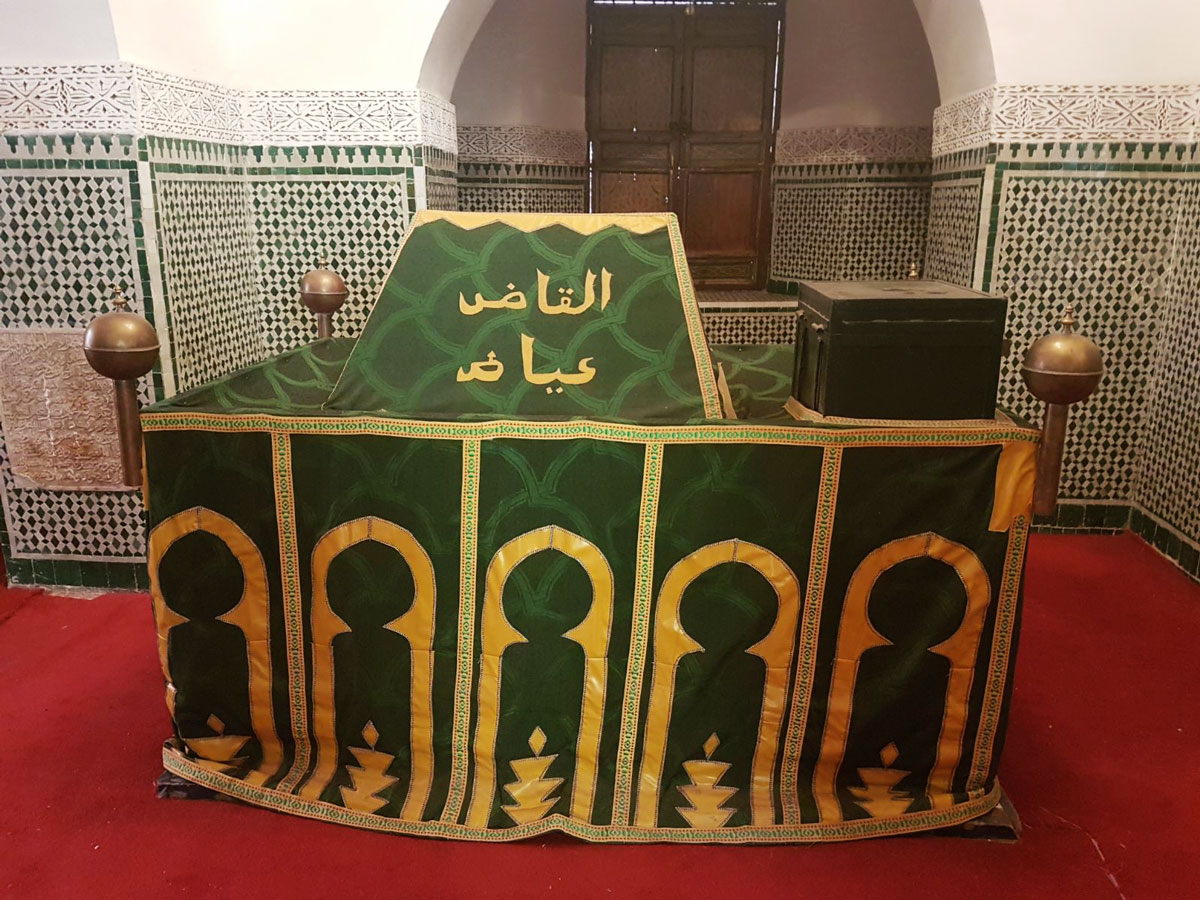
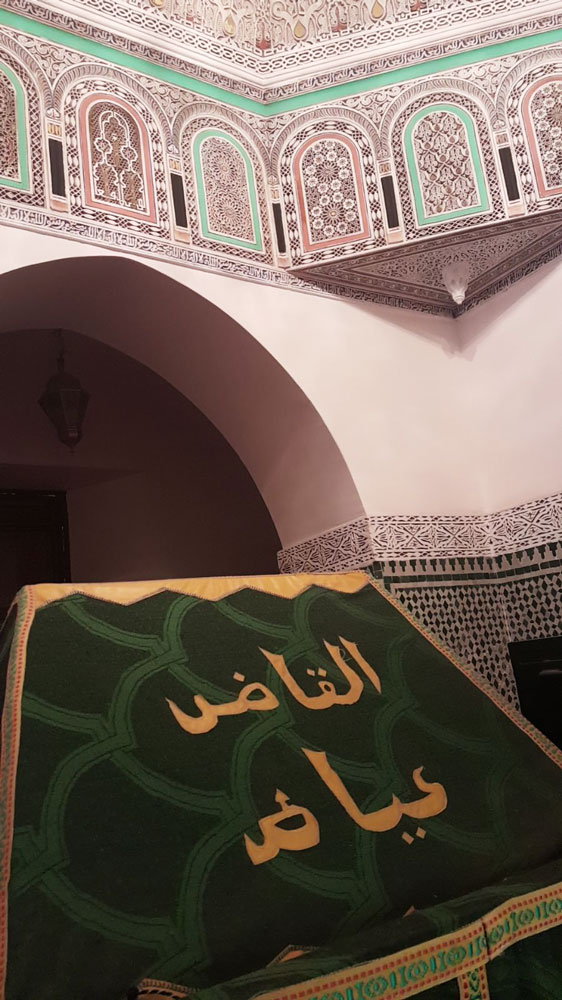
He is also venerated as one of the Seven Saints of Marrakesh, and his tomb in Marrakesh continues to be a site of frequent visitation and reverence.
His Life
According to his son, Muhammad, Qadi Iyad’s ancestors originally came from Andalusia before settling in the city of Fes, where they stayed for some time at the Qarawiyyin.
Qadi Iyad was a leading authority of his time in hadith and its sciences. He was also a scholar of tafsir, a jurist in usul, and well-versed in Arabic grammar, language, and rhetoric. He had extensive knowledge of Arab history, including battles and genealogies. A skilled legal expert, he was capable of issuing judgments and drafting legal documents. He mastered and preserved the Maliki school of thought. In addition to his scholarly pursuits, he was an accomplished poet, a student of literature, and an eloquent speaker. Known for his patience, generosity, and strong moral character, he was respected for his integrity and commitment to truth.
In 509 AH, he travelled to Andalusia in pursuit of knowledge. In Cordoba, he studied under prominent scholars such as Qadi Abu ‘Abdullah Muhammad ibn ‘Ali ibn Hamdin, Abu’l-Husayn ibn Siraj, and Abu Muhammad ibn ‘Attab. He received an ijaza from Abu ‘Ali al-Ghassani. Later, in the East, he studied with Qadi Abu ‘Ali Husayn ibn Muhammad as-Sadafi and others. He eagerly sought out learned teachers and benefited from their knowledge. Among his notable teachers were Abu ‘Abdullah al-Mazini, Abu Bakr at-Tartushi, and Qadi Abu’l-Walid ibn Rushd. According to the author of as-Sila al-Bashkuwaliyya, he had learned from around one hundred scholars—some gave him ijazas, while others he simply learned from through listening. His son Muhammad also mentioned several scholars among his teachers, including Ahmad ibn Baqi, Ahmad ibn Muhammad ibn Makhul, Abu’t-Tahir Ahmad ibn Muhammad as-Salafi, al-Hasan ibn Muhammad ibn Bakra, Qadi Abu Bakr ibn al-‘Arabi, and others too numerous to list.
Qadi Iyad compiled a vast number of hadiths and was deeply committed to hadith scholarship. He stood out for his depth of knowledge and understanding. After returning from Andalusia, he gained widespread respect in Ceuta, especially for his teaching on the Mudawwana at around the age of thirty. He was soon appointed to issue legal rulings and became the qadi of his hometown, a position he held for many years and in which he earned great acclaim. In 531 AH, he was appointed qadi of Granada, though his tenure there was brief, and he later returned to serve again as qadi of Ceuta. The people of Granada benefited greatly from his knowledge during his time there.
Death
When the Almohads rose to power, Qadi Iyad travelled to Salé to meet their Amir and remained there until political unrest broke out among the Almohads in 543 AH (1148–1149 CE). As the situation deteriorated, his position became untenable, and he went into exile in Marrakesh. He passed away there in 544 AH (1149–1150 CE), with reports differing on whether he died in Jumada al-Akhirah or Ramadan. His son, Qadi Muhammad ibn Iyad, recorded his death as occurring on the night of Friday, 9 Jumada al-Akhirah. He was buried in Marrakesh near the Gate of Ilan. Some later accounts claim he was poisoned, though the exact cause of death remains uncertain.
Works
Qadi Iyad authored many exceptional works. Among the most renowned are Kamal al-Mu‘allim, a commentary on Sahih Muslim, and al-Shifa’, a truly extraordinary book, which is universally admired, widely studied, and frequently recommended. Copies of al-Shifa’ have spread throughout both the eastern and western Islamic worlds.
He also wrote Kitab Mashariq al-Anwar (The Rising of Lights), a work explaining the rare and obscure hadith found in the Muwatta’, Sahih Muslim, and Sahih al-Bukhari. In it, he meticulously clarifies difficult passages, corrects misspellings, provides proper vowelisation, and verifies the names of narrators.
Another of his contributions is Kitab at-Tanbihat al-Mustanbita (Discovered Admonitions), a commentary on the Mudawwana, in which he explains rare expressions with proper diacritics and formulates its key legal questions.
He also compiled Tartib al-Madarik wa Taqrib al-Masalik, a comprehensive biographical work on Imam Malik ibn Anas and the eminent scholars of the Maliki school.
He also compiled:
- Kitab al-I‘lam bi-hudud qawa‘id al-Islam (Signs on the limits of the Rules of Islam)
- Kitab al-Ilma‘ fi dabt ar-Riwaya wa Taqyid as-Sama‘ (Indication of the accurate determination of the riwaya and the recording of oral tradition)
- Kitab Bughya ar-Ra’id lima tadammanahu hadith Umm Zar‘ (The Benefits contained in the hadith of Umm Zar‘)
- Kitab al-Ghanima on his shaykhs
- Kitab al-Mu‘jam on the Shaykhs of Ibn Sakra
- Kitab Nazm al-Burhan ‘ala hujja jazm al-Adhan (The Order of the Proof of the soundness of shortening the Adhan)
- Kitab Masa’ila al-Ahl alMashrut baynahum at-Tazawur (Book of Questions).
Some of his books remained unfinished. Among them are:
- al-Maqasid al-Hisan fima yalzam al-Insan (The Excellent Goals of what a man must do)
- Kitab al-‘Uyun as-Sitta fi akhbar Sabta (The Six Sources in the Reports of Ceuta)
- Kitab Ghaniya al-Katib wa’l-bughya at-Talib fi as-Sudur at-Tarassul (The Wealth of the Writer and the Desire of the Seeker)
- Kitab al-Ajwiba al-Muhabbira ‘ala’l-as’ila al-mutakhayyira (Answers to Selected Questions)
- Kitab Ajwiba al-Qurtubiyyin (Answers to the Cordobans)
- Kitab Ajwiba ‘amma nazala fi ayyam quda’ihi min nawazil al-ahkam fi safar
- Kitab Sirr as-Sara fi adab al-quda’ (His answers on what occurred in the days he was qadi)
- Book of his speeches. He only delivered speeches which he himself had written. He also wrote a lot of poetry.
References
- Muhammad ﷺ Messenger of Allah, Ash-Shifa by Qadi Iyad – translated by Aisha Bewley.
Photo Gallery