



Durood-e-Muqaddas
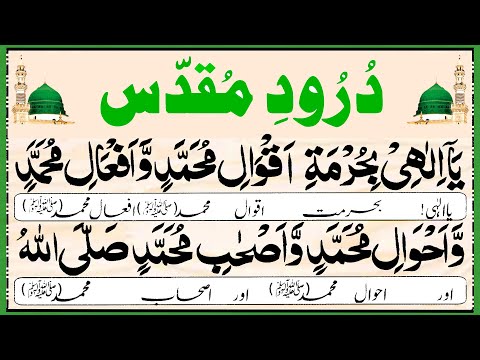
Durood-e-Muqaddas (Urdu: درود مقدس; “The Sacred Salutation”) is a litany of Salawat upon the Prophet ﷺ. Distinguished by its elegant alphabetical structure, it invokes Allah through the Prophet’s ﷺ words, actions, qualities, virtues, and spiritual states, moving sequentially through the letters of the Arabic alphabet, beginning with Alif and ending with Ya. It also incorporates a number of classical Persian expressions alongside its predominantly Arabic composition.
Read lessArabic, Transliteration and Translation
Video
About Durood-e-Muqaddas
Durood-e-Muqaddas is a traditional litany of Salawat upon the Prophet Muhammad ﷺ. Arranged according to the letters of the Arabic alphabet, it sends prayers upon the Prophet ﷺ while mentioning his words, actions, virtues and qualities. It has been recited for generations throughout South Asia and remains one of the region’s best-known prayers upon the Prophet ﷺ.
The Alphabetical Structure
One of the distinctive features of Durood-e-Muqaddas is its alphabetical structure. Beginning with Alif and continuing through the Arabic alphabet to Ya, each section contains words and attributes beginning with the corresponding letter, tying them to the name and life of the Prophet Muhammad ﷺ.
For example:
- The letter Alif (أ): Praises his Aqwal (sayings), Af’al (actions), and Ahwal (spiritual states).
- The letter Ba (ب): Praises his Badan (body), Barakah (blessings), and Buraq (celestial mount).
- The letter Taa (ت): Praises his Tawallud (birth), Ta’abbud (worship), and Tahajjud (night prayers).
Arabic and Persian
Durood-e-Muqaddas is written primarily in classical Arabic, but it also includes a number of classical Persian words. These reflect the literary tradition in which the prayer was composed and transmitted, where Arabic remained the language of religious scholarship while Persian was widely used in poetry and prose.
Examples include:
- Kūshish (کوشش) – striving or effort.
- Namāz (نماز) – ritual prayer.
- Yārī (یاری) – companionship or friendship.
- Yakānigī (یکانگی) – oneness or unity.
- Zārī (زاری) – humble weeping or supplication.
These Persian words appear naturally alongside the Arabic text and contribute to the distinctive style of the litany.
Reported Virtues
Classical devotional works attribute numerous virtues and benefits to the recitation of Durood-e-Muqaddas. Among those mentioned are:
- Reciting it even once time in a lifetime is said to carry a reward comparable to abundant voluntary fasting and voluntary Hajj.
- Frequent recitation is said to raise a person to spiritual ranks likened to those of a Wali, Qutub, Ghawth, and Abdal.
- It is reported to be a means of forgiveness for both minor and major sins.
- Reciting it once daily after the Fajr prayer is said to bring comfort at the time of death, ease in answering the questioning in the grave, and peace in the Barzakh.
- On the Day of Judgement, the reciter is described as being resurrected with a radiant face, receiving the record of deeds in the right hand, having good deeds outweigh bad deeds, receiving the intercession of the Messenger of Allah ﷺ, and entering Paradise without reckoning.
- It is also said that the reciter will be recognised for the honour attained through sincere devotion to the Prophet Muhammad ﷺ.
Recommended Recitation
Various scholars and spiritual masters have also recommended particular recitations for specific purposes, including:
- Protection from the devils: Recite 11 times during Tahajjud for 7 consecutive Thursday nights (the eve of Friday).
- Acceptance of supplication and fulfilment of a lawful need: Recite 7 times during Tahajjud, then make du’a while in prostration.
- Seeking children: A woman seeking children may recite it 3 times daily, blow over water, and drink it.
- Seeking Allah’s pleasure and increased provision: Recite it before sleeping on Thursday night. Traditional works mention four blessings: the pleasure of Allah, the pleasure of His Messenger ﷺ, entry into Paradise without reckoning, and an increase in provision.
- Protection from calamities and illness: Reciting it and then blowing over oneself serves as a means of protection from disasters, calamities, and illness while remaining under Allah’s care.
- Spiritual advancement: Regular recitation is said to elevate one’s spiritual rank.
- Seeing the Prophet Muhammad ﷺ in a true dream: Recite once daily for 40 consecutive days before sleeping.
- General practice: Traditional works encourage reciting Durood-e-Muqaddas at least once each week.


Maachaa Allaah – c’est une importante prière.
Que DIEU nous donne la foi et nous accorde la bénédiction dans nos actions cultuelles quotidiennes !
MashaAllah – does anyone know who composed this salawat?